
This article shows how to make decaf coffee at home.
Here is the short answer:
Decaffeinating coffee at home can be challenging, and it is typically a process better suited for professionals. However, if you are interested in attempting it at home, this article provides a method inspired by the Swiss Water Process.
Introduction:
Decaf coffee, short for decaffeinated coffee, has gained significant popularity in recent years. It offers the rich aroma and taste of coffee without the stimulating effects of caffeine.
Whether you prefer to cut down on caffeine intake or simply enjoy a cup of coffee in the evening without sleep disruptions, making decaf coffee at home allows you to customize your coffee experience.
This article will explore various methods of decaffeination and guide you through the process of making decaf coffee at home. We will also provide tips to enhance the flavor of your brew.
The Process of Making Decaf Coffee
Before dealing with how to make decaf coffee at home, let’s first delve into how the process of decaffeination is done by professionals.
The basics of decaffeination
Decaffeination is the process of removing caffeine from coffee beans while preserving the flavor compounds. There are several methods used to decaffeinate coffee, each with its own benefits and drawbacks. The primary goal is to extract the caffeine while minimizing the loss of desirable flavors.
Industrial Methods of Decaffeination

Coffee is decaffeinated using different methods, including:
- The Swiss Water Process: This method uses water as a solvent to remove caffeine from coffee beans. It involves soaking the beans in hot water, filtering the solution to remove caffeine while preserving flavor compounds, reabsorbing flavors in new beans, and drying and roasting the decaffeinated beans.
(Learn more about this method: How is coffee decaffeinated with water?) - The Carbon Dioxide (CO2) Method: In this method, pressurized carbon dioxide is used to extract caffeine from coffee beans. The process includes soaking the beans in water, exposing them to pressurized carbon dioxide, filtering the caffeine-rich carbon dioxide, and then drying and roasting the decaffeinated beans.
- The Solvent-Based Method: This method involves soaking green coffee beans in hot water and treating the water with organic solvents such as ethyl acetate or methylene chloride to extract caffeine. The caffeine is separated from the solvent, and the decaffeinated beans are rinsed with water before being dried and roasted.
These methods are commonly used by manufacturers and professionals to decaffeinate coffee, each with its own specific steps and variations.
How is coffee decaffeinated naturally?
Naturally decaffeinated coffee can be achieved through methods such as the Swiss Water Process (SWP) and the Carbon Dioxide (CO2) Process described above. These methods preserve the flavor compounds without synthetic chemicals.
The Solvent-Based Method, which involves chemical solvents, is not considered natural.
How to make decaf coffee at home?
Now, let’s talk about how to make decaf coffee at home!
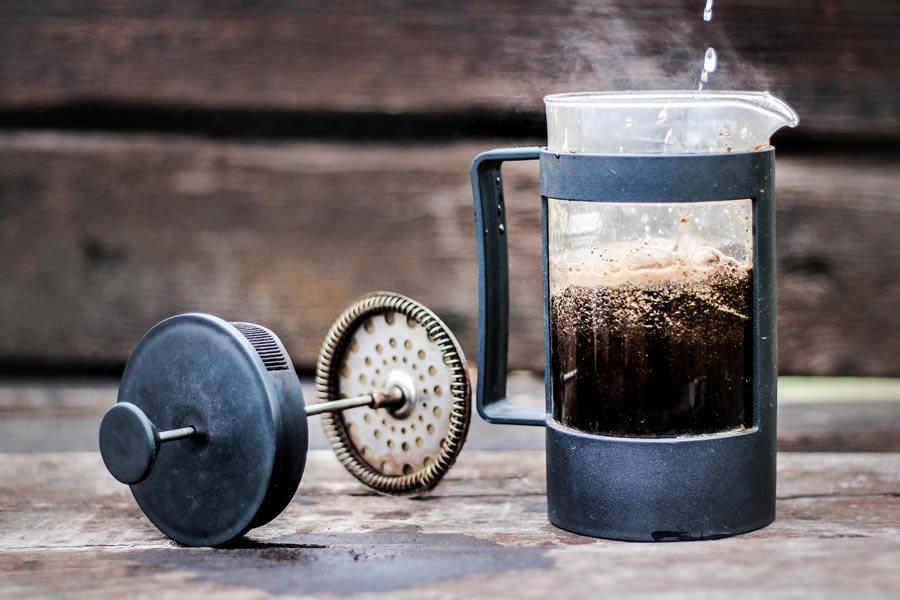
Decaffeinating coffee at home can be a fun experiment, although it’s important to note that it may not produce the same results as commercially decaffeinated coffee.
If you’re interested in trying to reduce the caffeine content of your coffee at home, you can attempt the following method inspired by the Swiss Water Process:
- Step 1: Boil a pot of water and let it cool for about a minute to reach a slightly lower temperature.
- Step 2: Place your desired amount of ground coffee into a French press or a heat-resistant container.
- Step 3: Pour the hot water over the coffee grounds, ensuring they are fully saturated. Give it a gentle stir.
- Step 4: Allow the coffee and water mixture to steep for approximately 30 seconds to a minute. During this short brewing time, some of the caffeine will be extracted as it is one of the first compounds to be released.
- Step 5: Carefully pour the coffee liquid through a fine-mesh strainer or coffee filter to separate the grounds from the liquid. Discard the liquid, as it will contain a significant amount of caffeine.
- Step 6: Return the coffee grounds to the French press or container.
- Step 7: Boil a fresh batch of water and let it cool for a minute before pouring it over the coffee grounds once again.
- Step 8: Allow the coffee grounds to steep for your preferred brewing time, typically around 3-5 minutes for a French press or longer for other brewing methods.
- Step 9: Filter the brewed coffee using a coffee filter or any suitable filtration method, discarding the used grounds.
- Step 10: Finally, enjoy your homemade low-caffeine coffee!
It’s important to remember that this method may not completely remove all caffeine from the coffee, but it can help reduce the caffeine content to some extent.
The taste profile of the coffee might be slightly altered, and the final product won’t be completely caffeine-free.
For a more thorough decaffeination process, specialized equipment and methods used in commercial decaffeination, such as the Swiss Water Process, direct solvent method, or CO2 process, are required.
Remember to experiment with the brewing time and ratios to find the right balance that suits your taste preferences. Have fun exploring the world of homemade decaf coffee!
You can find naturally decaffeinated coffee brands on Amazon.
Enjoying Decaf Coffee
Is decaffeinated coffee bad for you?
Decaffeinated coffee is not considered bad for you. It undergoes a decaffeination process to reduce caffeine content while retaining many of the health benefits associated with regular coffee, such as antioxidants and beneficial compounds.
However, individual sensitivities may vary, and it’s best to consult with a healthcare professional regarding your specific health conditions or concerns.
Pairing decaf coffee with food

Decaf coffee can complement a variety of foods, both sweet and savory. Consider the following pairing options:
- Sweet treats and desserts: Enjoy a cup of decaf coffee with pastries, cakes, cookies, or chocolate-based desserts. The balanced flavors of decaf coffee can enhance the sweetness of these treats.
- Savory snacks and breakfast options: Pair decaf coffee with breakfast items like muffins, croissants, or savory dishes like quiche or eggs benedict. The rich flavors of decaf coffee can complement the savory elements of these dishes.
Decaf coffee alternatives
If you’re looking for alternative options to decaf coffee, consider the following:
- Decaf coffee blends and flavored options: Explore different decaf coffee blends that combine beans from various regions. Additionally, flavored decaf coffees like vanilla, hazelnut, or caramel can add an extra layer of taste to your brew.
- Herbal teas and caffeine-free beverages: If you’re seeking a completely caffeine-free alternative, herbal teas such as chamomile, peppermint, or rooibos can provide a soothing and flavorful option. Other caffeine-free beverages like hot chocolate or fruit-infused water can also be enjoyable choices.
Conclusion
Looking for information about how to make decaf coffee at home? Well, the bad news is that decaffeinating coffee at home is a challenging process best left to professionals. However, if you are determined to make decaf coffee at home, this article provides a method inspired by the Swiss Water Process. Follow the steps outlined to reduce the caffeine content in your coffee and enjoy a homemade cup of decaf coffee.
FAQs
How do I change my coffee from regular to decaf?
Converting regular coffee to decaf at home can be challenging, but you can reduce the caffeine content with these steps. First, brew a strong pot of regular coffee and heat a separate pot of water. Then, combine the regular coffee with hot water. Let the mixture sit for 5 minutes and filter the mixture to remove grounds. Repeat the process if desired. Finally, enjoy your homemade lower-caffeine coffee.
Can you water down coffee to make it decaf?
While water is used in the decaffeination process, it is not an effective method on its own. Water is not a selective solvent, meaning it removes not only caffeine but also other soluble substances like sugars and proteins. This is why specialized methods such as the Swiss Water Process or the use of carbon dioxide or solvents are employed to selectively extract caffeine while preserving flavor compounds. But if you want to try to decaffeinate your coffee grounds using water, you may want to follow the steps described in this article.
Is decaf coffee completely caffeine-free?
No, decaf coffee is not completely caffeine-free. It undergoes a decaffeination process that reduces caffeine content to a minimal level, usually around 97% to 99% caffeine-free.
Is decaf coffee good or bad for you?
Decaf coffee still contains antioxidants and beneficial compounds found in regular coffee. It may provide some health benefits, such as reducing the risk of certain diseases, without the stimulant effects of caffeine.
Does decaf coffee taste different from regular coffee?
Decaf coffee can have a slightly different taste profile compared to regular coffee due to the decaffeination process. However, the flavor will primarily depend on the quality of the beans, roast level, and brewing technique.